
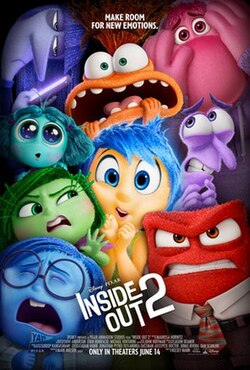






Pixar Animation Studios makes waves with their 2015 hit film Inside Out and its 2024 sequel Inside Out 2, tackling the complexities of growing up and providing children with the ability to understand their emotions.
Growing up is hard. It feels like no one understands you or what you’re going through. Between the physical and biological changes to your body and the evolution of your mind, it’s hard to even understand yourself. Let alone understand who truly are and who you want to be.
Inside Out uses a comedic approach to understanding who we truly are and what makes us the way we are!
- How Inside Out’s Sadness Teaches Us Feel Deeply
- How Inside Out’s Anger Teaches Us to Turn Anger into Passion
- How Inside Out’s Fear Teaches Us to Think Before We Act
- How Inside Out’s Disgust Teaches Us Boundaries
- How Inside Out’s Envy Teaches Us Not To Compare Ourselves
- How Inside Out’s Ennui Teaches Us That Disengagement is a Regulation Tool
- How Inside Out’s Embarrassment Teaches Us Vulnerability is a Super Power
- How Inside Out’s Anxiety Teaches Us Its Good To Be Afraid
- How Inside Out’s Joy Teaches Us to Find The Positive in Every Situation
How Inside Out’s Sadness Teaches Us Feel Deeply
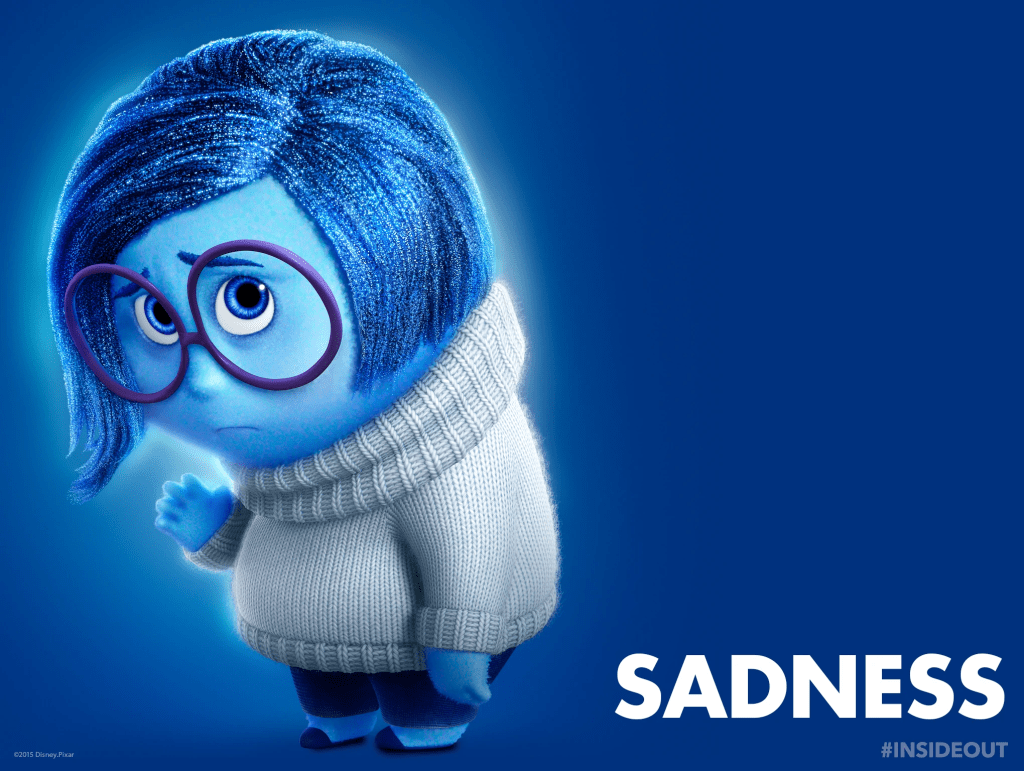
Inside Out teaches us that sadness shouldn’t be seen in a negative but should be celebrated for keeping us ground.
In the first film, Joy believes that Riley needs to be happy all the time and all of her core memories should be joyful. She goes out of her way to ensure that sadnesses memories do not become core memories or create an island of Riley’s personality.
However, on their journey to rebuild Riley’s personalities, Joy learns that sadness isn’t just mopy and negativity. Rather a way of understanding and connecting.
When Riley moves from Minnesota to San Fransisco, Joy immediately wants to look for the good in the situation. Where sadness provides a more authentic and realistic look.
Sadness reflects the pain of leaving your whole life behind. It wasn’t Riley’s idea to move away from her friends, her community and a place that fostered her love of hockey.
Sadness ground Riley in a time of uncertainty. She forces Riley to reflect on everything she loved about her old life. While sadness also forces Riley to connect to others on a deeper level by understanding how they are feeling and why.
How Inside Out’s Anger Teaches Us to Turn Anger into Passion
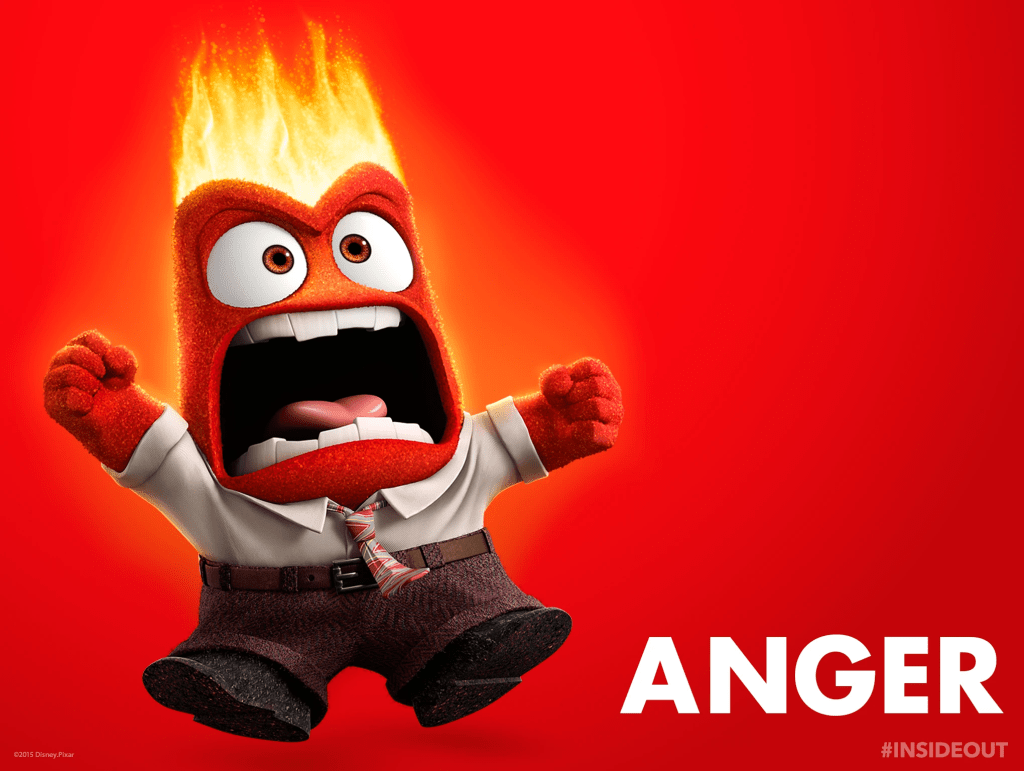
Inside Out’s Anger provides a comedic approach to understand the emotion of anger and how to regulate emotions. In the film, anger is hot-headed and literally bursts into flames. His character becomes over-simulated and agitated over the smallest inconveniences.
His character teaches us what anger is, why it occurs, how to regulate it, and how we can turn our anger into a positive impact. Inside out teaches us that anger is a feeling of irritation, annoyance, and a heated emotion. Anger quit physically represents the emotion, a hot-headed fireball who is quick to overreact to the tiniest of situations.
He shows us why we feel anger. Showcasing how when people get upset and feel strongly about a situation or reaction, they tend to overreact and/or react without thinking clearly or logically.
Anger teaches us how to turn our anger into passion. Teaching us how to be passionate about our opinions. He shows this in his hysterical hit lines “So that’s how you wanna play old man? No dessert?! Oh sure, we’ll eat dinner right after you eat this” and “Congratulations San Francisco, you’ve ruined pizza! First the Hawaiians, and now you.”.
Although they are meant to be comedic, it teaches us to be fiery about our opinions. That if we believe in something (no matter how funny) we should stand up for it! This is reflected is his desire for fairness. Anger acts out whenever Riley is wronged. Whether it’s by her friends, her family, teammates or classmates.
He acts out to make Riley stand up for herself and fight for fair treatment. This is showcased when opposing players cheat during the hockey game and Riley goes after then to make sure they get caught by the referee.
How Inside Out’s Fear Teaches Us to Think Before We Act
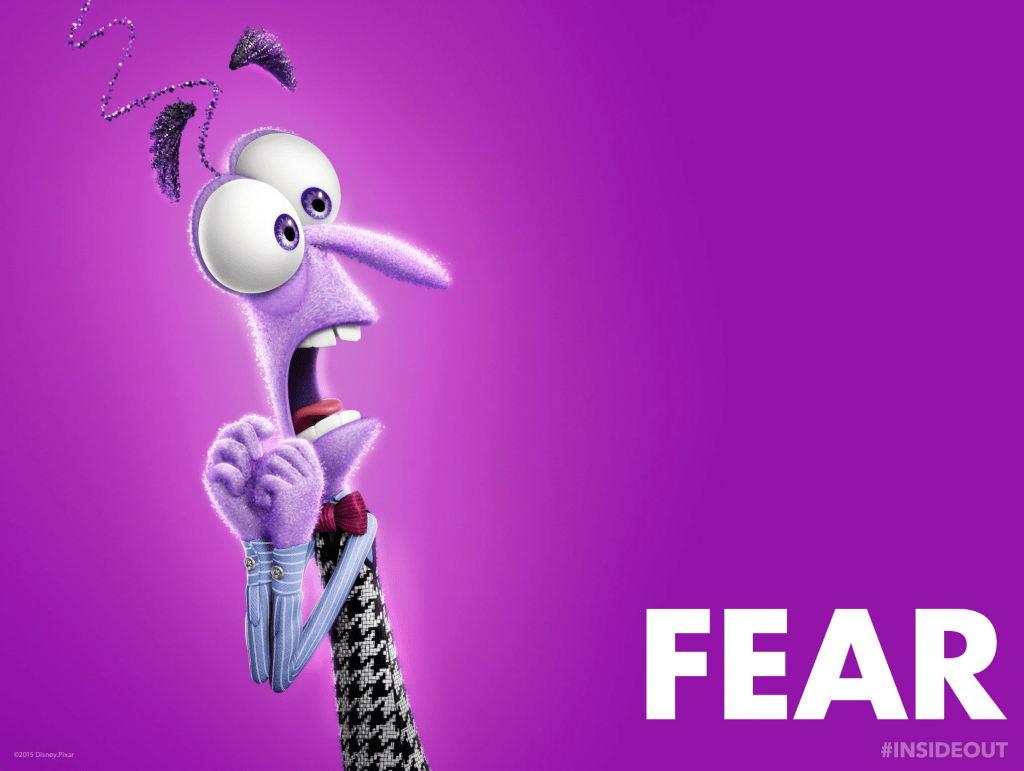
Inside Out’s Fear provides a comedic approach to understand the emotions of fear and how to regulate emotions.
In the film Fear, Fear is a scaredy cat who’s afraid of his own shadow. Fear always has a back-up (and a backup backup plan), and is prepared for any emergency that may occur. He always thinks of the worst-case scenarios and prepares the other emotions for how everything could go completely and utterly wrong.
His character teaches us what fear is, why it occurs, how to regulate it, and how we can use our fear to guide us and our decisions.
CopyEnter or paste text here
Showing us that fear is a feeling of distress, uncertainty, and unease. We feel fear when we don’t feel comfortable in a situation, whether it’s because it is unfamiliar to us or if it is a situation where we know the outcome could or would be negative.
In Inside Out, Fear teaches us to think before we act. He teaches us to think of every possible outcome of a choice or decision before making a decision. Teaching us the importance of thinking logically and trusting our judgement when approaching decision-making.
Through fear we develop a better understanding of ourselves. Were able to understand why we make the choices we do, the impacts of our decisions and how they shape our life path.
Showing us that fear is a feeling of distress, uncertainty, and unease. We feel fear when we don’t feel comfortable in a situation, whether it’s because it is unfamiliar to us or if it is a situation where we know the outcome could be negative.
How Inside Out’s Disgust Teaches Us Boundaries
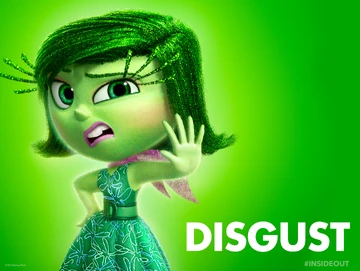
Inside Out‘s Disgust provides a child friendly approach to understand the emotion of disgust and how to regulate the emotion.
In the film Disgust is a maintenance fashionista who settles for nothing but the best. Her tag line eww and she is the first to pass up or turn down an offer.
She teaches us what disgust is, why it occurs, how we can use disgust to shape and set our boundaries.
Inside Out teaches us that disgust is not liking or feeling uncomfortable. In disgust we understand what we do no like, and why we do not like it.
Disgust comedically teaches us to set boundaries for ourselves. She knows who she is and know what she likes and doesn’t like. She teaches us we don’t have to conform to other or norms.
Disgust is not afraid to stand on her beliefs, she not afraid to voice her opinion (and disgust) on situations. She teaches us its good to have boundaries and we should respect our own boundaries.
How Inside Out’s Envy Teaches Us Not To Compare Ourselves
Inside Out 2‘s Envy teaches us not to compare ourselves. In a world where we are constantly pitted against others, we feel the constant pressure of being less than our peers.
Envy provides a child friendly approach to believing in ourselves and promotes being our own biggest fan. She teaches us what envy is, why it occurs, how we can use envy to shape a positive outlook on ourselves.
Inside Out 2 teaches us that envy is the feeling of comparison ourselves to others and the feeling of being less than or having less than others. When we wish we have what others have.
Envy teaches us to understand that we are all different and all have our own strengthens and weaknesses. Where others shine we might not, but there is always a place where we will shine.
Envy teaches us to embrace our differences to become our biggest cheer leader and reinforces the importance of not comparing ourself to others.
How Inside Out’s Ennui Teaches Us That Disengagement is a Regulation Tool

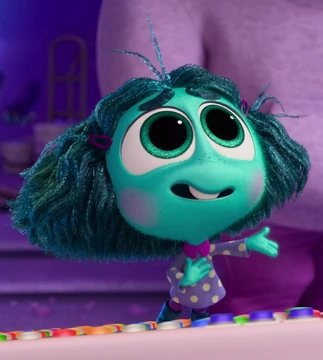
Inside Out 2’s Ennui teaches us that disengagement is a regulation tool for intense emotions. Ennui reflects the disengaged/bored feeling we experience as we grow up.
As we leave the excitement and enchantment of childhood and begin to navigate the real world we are forced to discover who we are and who we want to be. Ennui is when we outgrow old versions of our selves, where we no longer love the things we once did. What used to excite us, leaving us in a state of dread. In Inside Out 2 Ennui teaches us that disengagement is a tool for regulating intense emotions.
When we face intense emotions we often want to react right away. Which leaves us speaking irrationally, as we do not have time to think rationally about how we should approach the situation or what is an appropriate way to react.Inside Out 2’s Ennui teaches us that disengagement is a regulation tool for intense emotions.
Ennui reflects the disengaged/bored feeling we experience as we grow up. As we leave the excitement and enchantment of childhood and begin to navigate the real world, we are forced to discover who we are and who we want to be.
Ennui is when we outgrow old versions of ourselves, where we no longer love the things we once did. What used to excite us, left us in a state of dread.
In Inside Out 2 Ennui teaches us that disengagement is a tool for regulating intense emotions. When we face intense emotions, we often want to react right away. Which leaves us speaking irrationally, as we do not have time to think rationally about how we should approach the situation or what is an appropriate way to react.
By using Ennui and being disengaged we are not providing a reaction that we might later regret. Instead we are evaluating the situation without fully diving in.
Which has many positive effects, for example you do not overwhelm yourself with the situation and worry yourself about how to approach the situation. While Ennui also prevents us from making rash decision we could regret.
How Inside Out’s Embarrassment Teaches Us Vulnerability is a Super Power
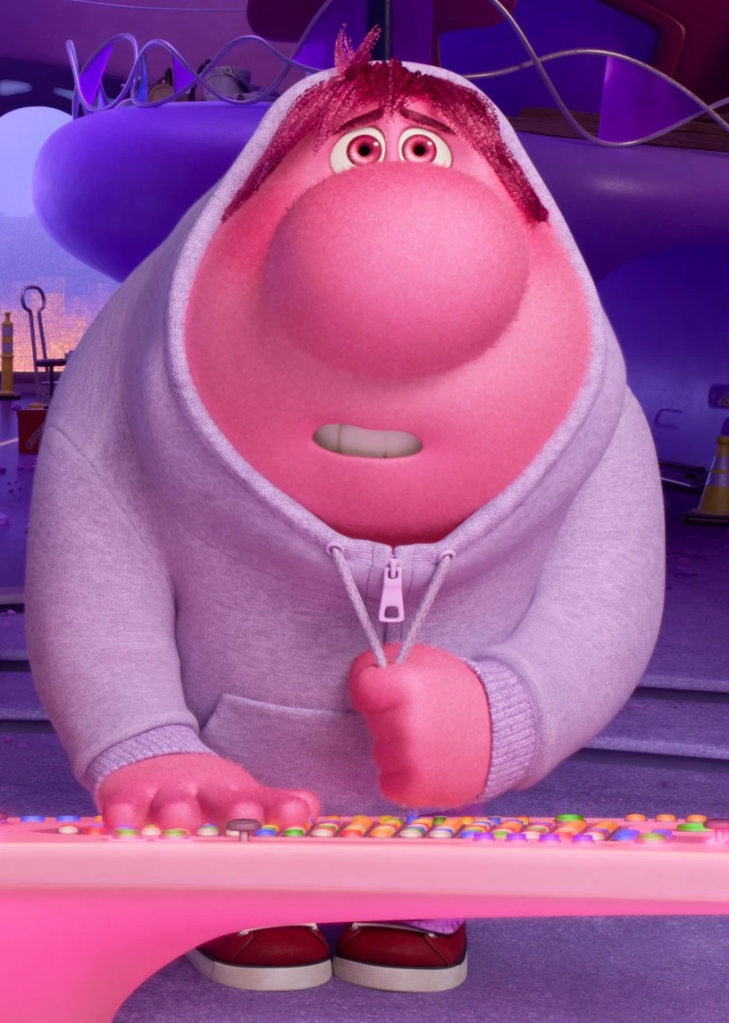
Inside Out 2‘s Embarrassment teaches us that vulnerability is a super power!
The film teaches us that embarrassment is the feeling of being misunderstood or discluded. Growing up we all have one shared goal, to fit in.
We all want to feel like we belong and are appreciated by others. When we stray from others or the typical norms we feel awkward and unsure of ourselves.
Embarrassment teaches us that vulnerability is a super power, and allows us to become the most authentic version of ourselves. He teaches us that we will find our place and where we’re meant to belong but only if we are authentically ourselves.
By becoming the most raw and vulnerable version of ourselves, we discover who we are, who we want to be and where we belong.
Being vulnerable allows us to open up and fully feel and embrace all of our emotion. Making us in-tune with our emotions and furthering our ability to regulate our emotions.
How Inside Out’s Anxiety Teaches Us Its Good To Be Afraid
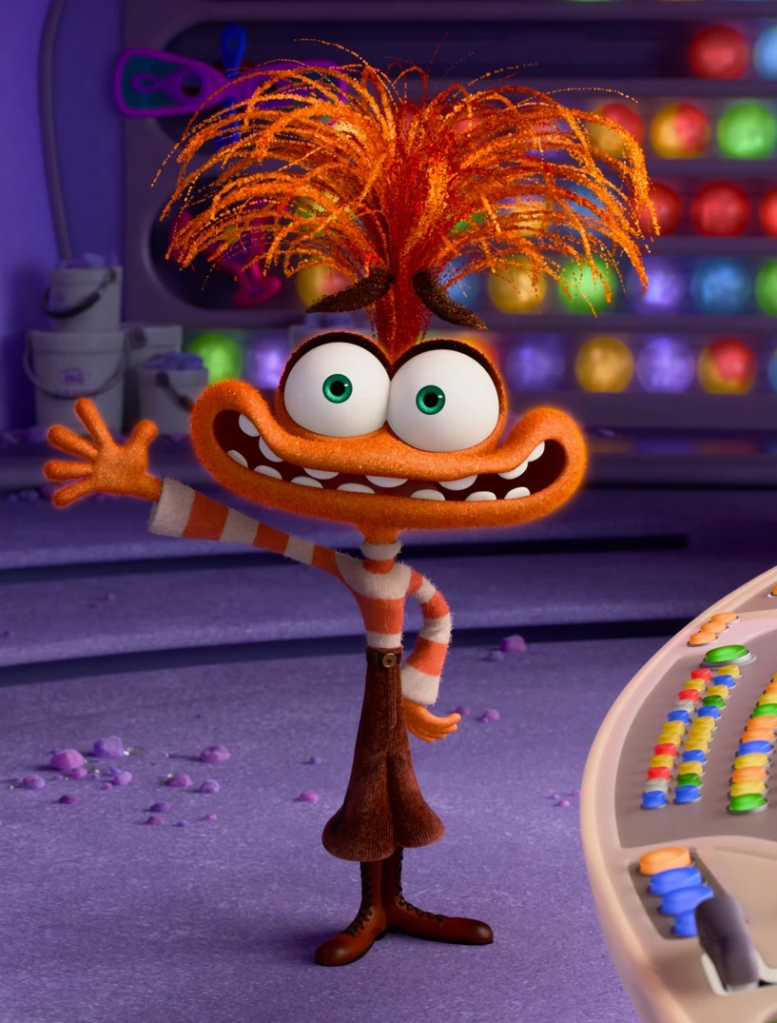
In a world where things are often taken for granted and people have lost site of enjoying the small things, Inside Out 2 provides a child friendly approach to understanding the positive impacts of anxiety.
Inside Out 2‘s Anxiety reflects the nervousness and fear feeling we experience. She teaches us its good to be anxious, it pushes us to become better visions of ourselves.
It helps us remember if we never take risks or leave our comfort zone we will never have the opportunity to grow and evolve. Anxiety gives us the push to consider life if we never take the risk, it allows us to truly think our decisions and their impacts.
The feeling of being scared reminds us of what we have. It’s a good thing to be nervous of losing or risking things, it means we care and the importance of doing/being our best to keep them.
Anxiety provides a tool set to approach decision making. It makes us think thoughtfully and through on our decisions and exactly how they can turn out and impact us. This allows us to create a plan of approach, where we can be ready for whats to come.
How Inside Out’s Joy Teaches Us to Find The Positive in Every Situation
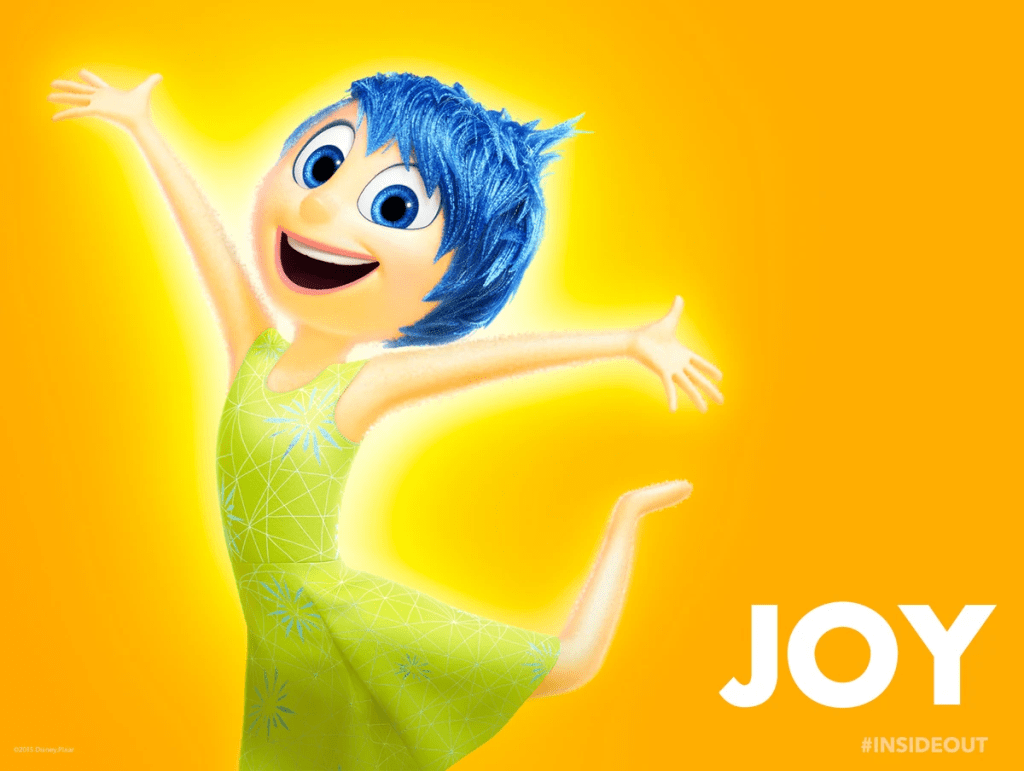
Inside Out’s Joy teaches us to look for the good in every situation.
In a world filled with negativity, it’s easy to get swept up into the worst case scenario mindset. To expect the worst and be surprised by the best.
Joy teaches us to seek the positive in each and every situation. She teaches that there will always be some positive aspect. Whether its big or small, there will always be something positive we can find and learn from everything we do!
Well she also teaches us the impact of our attitude on our approach to different situations. With a positive attitude anything is positive, whereas with a negative attitude we won’t be able to accomplish anything as we’ve already counted ourselves out.
I hope you enjoyed this post! I loved learn more about the different characters in Inside Out and how they mirror and teach us about emotional regulation!
I think the movies are a great resource to teach children about emotions and emotion regulation!
Comment down below your favourite character! Mines anger, I love the authenticity of his character and his comedic one liners!
Don’t forget to check out the latest posts on television, film and creatives!
 Popcorn Perspectives